The Benefits of Playing an Instrument
By Niobe Ebel, BBT Summer Staff,
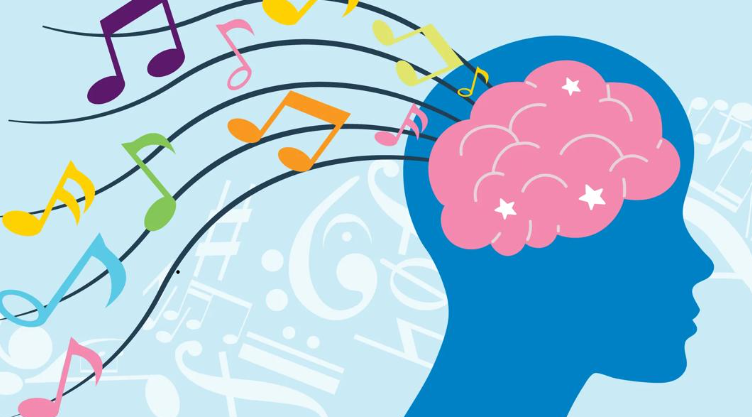
Music is an integral part of the world around us. It acts as a language that transcends cultural and geographic barriers, providing a deepened understanding of emotion. The conduit of all music is an instrument. This could be a piano, a guitar, or something as simple as your voice. Regardless of how you chose to express yourself musically there is always the guarantee that an instrument will be at your side assisting you. This blog post will highlight some of the benefits of learning to play an instrument and the resulting impacts on your brain!
When Learning Starts
Some people start learning musical instruments young through private lessons. But starting in elementary school music education becomes more standard, with children learning about beat and sound recognition. As they progress in their academic journey music becomes a subject that a child can elect to take. Middle school is when many become exposed to standard concert band instruments with continuation into high school in classes such as instrumental music 10, 20, and 30. In these higher level courses children learn how to read sheet music, and acknowledge the relationship between different clefs and keys. Music education can start young and develops with exposure and practice in its complexity. It is also important to acknowledge that this is only a standard timeline, it is never too late to start learning a new skill.
Listening
When listening to any sound the auditory system — which is a combination of the ears and the brain — works to help you process sensory information and turn it into thought. Sound moves on a specific path from the environment to the area of the brain where it all can be interpreted. Simply put, a sound wave will travel into the outer ear and vibrate the ear drum (tympanic membrane). From there the vibrations will pass through the inner ear and interact with things such as ossicles (small bones) and the cochlea. Next the auditory information will be converted into electric signals, these signals will flow on a nerve (vestibulocochlear nerve) to the auditory processing unit present in the temporal lobe of your brain. When you listen to music this path is followed, allowing you to recognize the set of sounds and develop feelings about them.
Listening to music also presents many benefits to personal well being. It can act as a stress reducer by lowering cortisol levels and regulating sympathetic nervous activity. Along a similar vein, listening to music offers the ability to improve overall mood by enhancing social connection. Other benefits include improved sleep, performance, and memory.
Playing and Learning an Instrument
A TED talk by Anita Collins described the cognitive experience of musicians while playing their instruments by saying, “Inside their brains there’s a party going on.” This means that while one outcome is being expressed instrumentally there is an immense amount of activity happening within the brain. Playing an instrument has been described as a multi-sensory experience because it requires focus from many different parts of the brain. There is a need for visual processing to read notes on a page of sheet music, auditory processing to know if a note is in tune, motor skills in order to execute the right action to form a note, muscle coordination, and much more. These skills are not isolated but rather work in tandem providing a mental workout. Learning music and playing an instrument has also been linked to improved language and math skills through the usage of math in notation as well as music’s identity as a universal language.
Executive Function and Instruments
Playing a musical instrument also helps improve executive function (EF). Through repetition and practice the different aspects of EF are tuned and strengthened. Working memory is the ability to hold and manipulate information over a short period of time. Playing an instrument uses working memory through the execution of complex tasks (playing notes, timing, interpreting auditory cues) over the course of a musical piece. This information must all be held and used at the same time allowing for a further exercise for one’s working memory. Moreover an intense amount of focus is required not only for learning how to play an instrument but also producing a performance. Instruments require the ability to hold joint attention between music, a conductor, your actions, and the actions of others. This juggling of attention can improve an individual's ability to prioritize attention. Music also requires adaptability because no performance is ever the same allowing for strengthened cognitive flexibility.
Personal Experience
My music journey started when I was young, with my parents playing different songs in the car as we drove through the city. This early exposure to music ignited passion in me that was later fed by classes in elementary school. As I grew I was exposed to symphonies and I found myself thinking, “ This is so impressive, I want to do that, I want to create!” So when I had the opportunity to join my middle school’s symphonic band it was an easy decision. Since then I have played the tuba and it has given me endless opportunities for brain development. A highlight that I will share with you today is sightreading. Sightreading is the practice of reading a piece of music for the first time and trying to play it as accurately as possible while still considering skill level and the complexity of the piece. When I first started band in grade six my sightreading abilities were fairly standard; I could succeed but I would lose my place or get confused often. Now after playing my instrument for seven years my sightreading abilities have flourished. I am confidently able to read most pieces of music without getting lost as frequently and with even the added ability of making decisions that can add to the musicality of a piece. Through playing my instrument and sightreading I have been developing my cognitive flexibility (the ability to look at something from multiple perspectives) as well as my working memory (holding and manipulating information). The skills that playing an instrument helped me learn are useful not only in a musical setting, but in many other areas of my life.
Conclusion
Ultimately, learning and playing a musical instrument is incredibly beneficial to the brain development of an individual. It provides a new opportunity for learning, allowing the creation of new neural pathways and the exercise of already existing ones. Music is a form of expression as well as a resource to improve brain development and executive function across the lifespan.
References
Government of Alberta. Music. Learn Alberta. https://curriculum.learnalberta.ca/curriculum/en/area/FARMUS
McColllum, S. (2019, September 5). Your Brain on Music: The Sound System Between Your Ears. Kennedy Center.https://www.kennedy-center.org/education/resources-for-educators/classroom-resources/media-and-interactives/media/music/your-brain-on-music/your-brain-on-music/your-brain-on-music-the-sound-system-between-your-ears/
Collins, A. (2014, July 22). How Playing An Instrument Benefits Your Brain. https://www.youtube.com/watch?v=R0JKCYZ8hng
Cherry, K. (2026, January 24). How to Listen to Music for Psychological Benefits. Verywellmind. https://www.verywellmind.com/surprising-psychological-benefits-of-music-4126866#citation-24
Lata, F. Kourtesis, I. (2021, August 13). Listening to music as a stress management tool. https://pmc.ncbi.nlm.nih.gov/articles/PMC9480195/
Cleveland Clinic. (2024, October 11). Vestibulocochlear Nerve. Cleveland Clinichttps://my.clevelandclinic.org/health/body/vestibulocochlear-nerve
Queensland Government. (2022, July 12). Brain Maps: Temporal Lobes. Queensland Health. https://www.health.qld.gov.au/abios/asp/btemporal_lobes
Godard, M. (2024, December 13). What Research Says About How Playing an Instrument Benefits Your Brain. Creyos. https://creyos.com/blog/how-playing-an-instrument-benefits-your-brain
Photo
Cleveland Clinic. (2025, August ). Your Brain on Music: How Tunes can Impact Your Mind. https://health.clevelandclinic.org/how-does-music-affect-the-brain