The importance of Sibling Relationships on Brain development
By Meghan Warf, BBT Summer Student,
Intro:
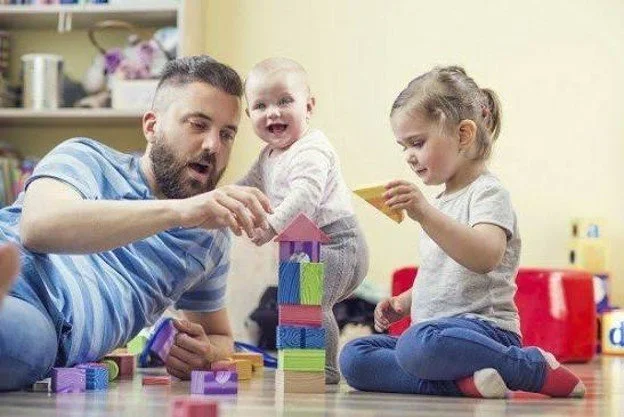
Whether you have siblings yourself or know someone who does, most of us have witnessed the loving and sometimes wild and turbulent dynamics that most seem to share. While sibling relationships can be challenging, they play a significant role in childhood development. As caregivers and parents, understanding these interactions can maximize their benefits. This blog seeks to explore how sibling relationships help shape development through childhood into adulthood, specifically the development of a child’s, emotional regulation and social skills, through conflict, parent-sibling interactions and pretend play.
Emotional Regulation and Social Skills
Regardless of the caring and loving aspects of sibling relationships, a very common experience for most is unpredictable conflict. Though seemingly counterintuitive, disagreements surprisingly play a crucial role in the development of good emotional regulation and social skills. According to Kramer (2014), siblings influence one another’s ability to develop Theory of Mind (ToM)– which is the understanding that people are independent from one another and have their own thoughts, beliefs and desires. As a result of interpersonal disagreements, children may be better equipped to identify and label their emotions, [BT1] anticipate the reactions of others and most importantly, the impact their behaviour has on others. These skills are developed through everyday experiences such as through conflict, parent-sibling guided interactions and pretend play.
Conflict/Conflict Management
Siblings often fight for a variety of reasons, just to name a few; problems with sharing, jealousy issues or crossing one another’s boundaries. These experiences can serve as valuable learning opportunities. During conflict children are exposed to a wide range of emotions, and learn to interpret body language and facial expressions, aiding in stronger emotional recognition and social understanding. Further, because conflict is often, emotionally charged, children are forced to practice self-regulation by learning how to handle strong feelings and communicate their needs in an effective way which as suggested by Kramer (2014), strengthens both their executive function (EF) and emotional regulation skills.
Parent-Sibling Interactions And conflict resolution
Parents play an essential role in helping children learn healthy ways to resolve conflict. Ross (2014) describes this as developing a “Resolution Model,” which is achieved through demonstrating effective communication and problem-solving strategies, parents can provide their children a guide to conflict in the future.
As children begin using these strategies, they practice behaviour management while learning how to articulate their needs and concerns in an effective and respectful manner. By responding to and correcting sibling conflict, rather than simply stopping it, parents and caregivers help children develop the communication and relationship skills needed for healthy social interactions throughout life.
Pretend Play
Focusing more on positive interactions between siblings, pretend play is extremely beneficial for development. As suggested by Kramer (2014), It’s an outlet for creativity, and requires children to communicate clearly, cooperate and negotiate with one another. For example, practicing taking turns and working together to achieve a mutual goal while staying adaptable to game changes, compel children to communicate with one another while also staying calm. This fosters good communication skills and emotional control. Along with that, pretending to be different characters, urges children to think about how others feel, which in turn helps them develop perspective, social understanding and empathy, strengthening Theory of Mind.
What About Only children?
You may be asking yourself, what about only children? Are they behind with the development of emotional regulation and social skills? These are valid concerns; however, research suggests that only children can develop these skills just as successfully with proper support. If you have an only child, practicing emotional coaching, surrounding them with peers, and incorporating them in other social environments, can provide age-appropriate practice and meaningful interactions. These experiences are important for the development of their emotional regulation and social skills in the absence of sibling relationships.
Conclusion
Through everyday experiences siblings can help one another develop, effective communication, empathy, and perspective-taking skills that contribute to healthy social development. By understanding the important role siblings play in development, parents and caregivers can better support these interactions and help children build the emotional and social skills they will carry throughout life. While an only [BT2] child can develop these same abilities through meaningful interactions with peers and other family members and the use of age tuned social practices. Building Brains Together (BBT)’s mission is to support the development of executive function (EF) in children with and without siblings. Strong EF skills provide a solid foundation for the development of emotional regulation and social skills, making them a key focus of BBT’s work and a crucial aspect of EF.
References:
Kramer, L. (2014). Learning Emotional Understanding and Emotion Regulation Through Sibling Interaction. Early Education and Development, 25(2), 160–184.
Ross, H. S., & Lazinski, M. J. (2014). Parent Mediation Empowers Sibling Conflict Resolution. Early Education and Development, 25(2), 259–275.
Lin, X., Liao, Y., & Li, H. (2022). Parenting Styles and Social Competence in Chinese Preschoolers: A Moderated Mediation Model of Singleton and Self-regulation. Early Education and Development, 33(3), 437–451.