Why Are Transitions So Hard for the Brain, Neurologically and Psychologically?
By Ria Pole
Introduction:
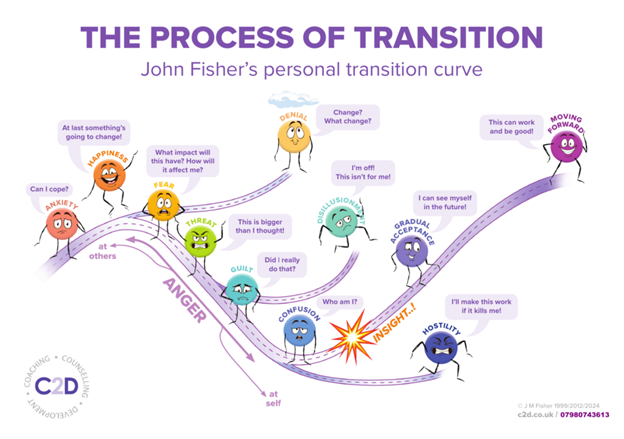
Transitions are a natural part of life. We are constantly transitioning from one stage to another, roles, routines, or responsibilities whether we are children, adolescents, or adults. Some changes that we face are good while some are bad, some are small while some are big, some are expected while some are unexpected. Even if it is a happy transition, we take time to adjust.
Human beings are wired to work best under conditions when the environment is full of familiarity and predictability. We always feel safest and calmest under conditions when we can predict and control the environment surrounding us. Transition creates disruption to these aspects of prediction, control, and familiarity. The individual may still feel overwhelmed and stressed even when it is positive change.
Why are Transitions so Hard?
Neurological Perspective:
Transitions are difficult in the following ways:
Brain Needs Predictability
Our brain craves predictability. We get a sense of control and safety through predictability. We feel safe when we have familiar routines and repeated patterns because our brain knows how to respond. Routines take less energy and effort making it efficient. Changes are cognitively and metabolically costly. Thus, our brain finds changes exhausting as it must adapt constantly to a new, unpredictable, unfamiliar environment, routines, people or behavior.
The Limbic System
Because of uncertainty, our brain is wired to view transition as a threat. The Limbic System has an emotional processing function. This system recognizes transition or change as danger and triggers the stress response, also known as the fight, flight, or freeze response. This can cause heightened anxiety and a strong urge to resist, prevent or reverse the change.
Executive Functions, Prefrontal Cortex
Transitions require us to make new decisions which are made by the prefrontal cortex, responsible for executive functions. These changes can deplete the brain’s executive functioning resources causing cognitive fatigue, resulting in decision making to feel impossible. based on social roles. Thus, the prefrontal cortex can also struggle with letting go of the old habits, behavior and activating and starting new ones.
Homeostasis
Homeostasis- the term was named by an American physiologist, Walter Bradford Cannon. It is known as a mechanism in which our body maintains a stable internal environment so the conditions could remain optimal for survival. The design of the nervous system is to maintain homeostasis by keeping the environment stable. When routines are changed suddenly, the brain works harder to regain stability. The disrupted stability causes fluctuating hormones which are associated with stressful thinking, emotions, feeling stuck, overwhelmed, or even reactive. When this happens, it becomes difficult to make a decision.
Psychological Perspective:
Transitions are difficult in the following ways:
Disruption of routine
Routines and habits give our life shape, predictability and a sense of control. When routines are disrupted, we experience instability, uncertainty and unpredictability causing stress and anxiety for the brain to adapt to.
Fear of unknown
As humans, we like knowing and predicting our future. Transitions causes people to question the unknown outcome. They worry if the change could potentially cause failure or negative emotions. This uncertainty then triggers stress and anxiety about the potential negative outcomes or future.
Loss of identity
Our roles, whether it is being a partner, mother, or a daughter shape how we see ourselves. When roles are changed due to loss or entering a new phase of life, people may feel like they have lost their identity, feeling of grief and loss. This could lead to questioning values, purpose, and direction of their existence.
Emotional exhaustion
Changes are emotionally exhausting as they require constant regulation of emotions. This can lead to fatigue or burnout preventing individuals from making decisions.
Self esteem
Transitions often makes people question their value and abilities. When individuals are not able to adapt to the change, they may find themselves questioning their self-esteem. Their self-esteem may decrease reinforcing negative feelings about the transition which further makes it difficult to break out of this cycle.
Social support
Transitions could also change social networks. Losing social support could further intensify the stress to adapt to the new environment. We may feel lonely and anxious because of social isolation making it more difficult to adjust.
How to Support/Navigate Ourselves Through Transitions?
⁃ The first step is acceptance. Acknowledging that transitions are difficult allows us to understand ourselves rather than judging ourselves. The foundation of growth is self-compassion and kindness.
⁃ Practical strategies are as follows:
⁃ Understand the transition, acknowledge the challenges and address them first
⁃ Create awareness around the emotions
⁃ Try to normalize the emotions or the experience as a “natural response to the change” instead of denying the emotions
⁃ Create SMART goals to regain the sense of control/predictability (SMART=small, measurable, action-oriented, realistic, time-bound)
⁃ Establish new routines
⁃ Maintain other familiar routines like regular meals, sleep, exercise or play amongst the transition
⁃ Seek support from friends and professionals
⁃ Set realistic expectations
⁃ Practice mindfulness techniques
⁃ Exercise and play. This is because these physical activities will help in the reduction of the synthesis of stress hormones, as well as the release of dopamine.
Time and resources are needed to adapt to the changes. Try to be as patient and supportive as possible; let the brain itself find stability and balance in the chaos.
References:
Path, R., & Path, R. (2024b, May 2). Why are transitions so hard psychologically? Right Path Counseling. https://rightpathcounselingli.com/why-are-transitions-so-hard-psychologically/
Wilhelm, V. (2021, May 20). Why Transitions are Hard on Our Brains. The Gypsy Nurse. https://www.thegypsynurse.com/blog/transitions-are-hard/
Knighton, K. (2025, May 15). Your brain on change: Why transitions feel so hard - Pondr. Pondr. https://pondrpsychology.com.au/2025/04/your-brain-on-change-why-transitions-feel-so-hard/
Fisher, J. (2024, August 2). Process of Transition | C2D | Business Coaching, Counselling & Development. C2D Coaching, Counselling & Business Development. https://c2d.co.uk/techniques/process-of-transition/