Persian Games
Persian Games with Ali Siees
In celebration of Nowruz (The New Day) and the Persian New Year, March 21st, we are highlighting Persian Games in this blog post.
The most prominent Iranian Festival is Nowruz, the Persian New Year on the 1st day of Spring in Persian Solar calendar (21st of March). Celebrations around Nowruz is for revival of nature and new beginnings for the coming year [1]. To learn more about the Pursian celebrations and games visit: https://www.buildingbrains.ca/cultural-games-persian
Prior to the advent of computer games and many families moving into smaller apartments, children would run home after school to play traditional games. These games are known to foster teamwork, focus and creativity in light of the entertainment and social camaraderie among children [10].
Playing traditional Persian games was commonly intended to practice defense tactics and strategies and the games could be played by children of all socioeconomic backgrounds that would build community. The computer/digital games of today can be maladaptive, such that children and youth learn to be competitive amongst each other, always involves a loser, and often introduces violence into the game. [8].
“These are some of the games we used to play as kids, at home, the back yard or in the streets” (Ali Siees).
Vasati (Persian Dodgeball) یطسو
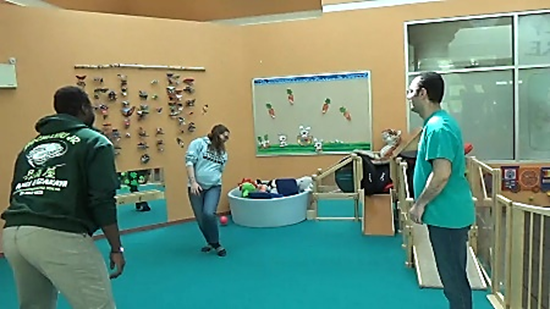
“Vasati could translate to middle group and is similar to the game of Dodgeball.”
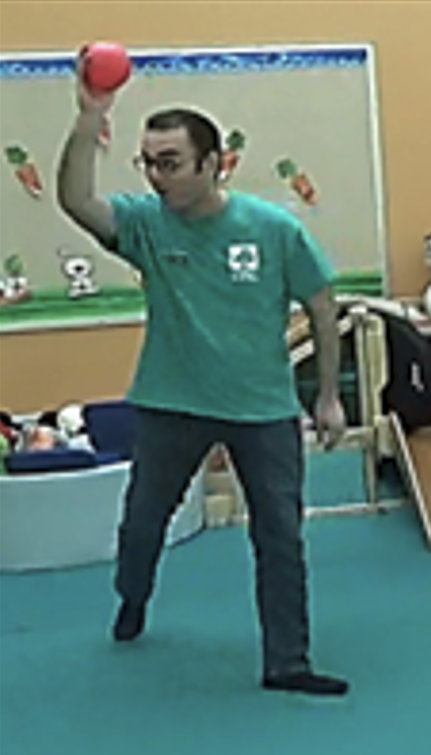
Vasati requires a softball which is often plastic. Two teams play; one is an outer team, which is divided into two groups, who are the attackers, and the other is called the middle team. When a player on the middle team has been hit by the ball thrown by the outer team, they are out. If the new center player catches the ball in the air, they can get hit once or bring back in the previously tagged player that was out” [11].
Another Persian version involves dividing the outer team into two groups placed on opposite sides of the field. A center team positions themselves in the space between them. “Players from the outer team must throw the ball at the members of the middle team to eliminate them from the game. Any player who is hit by the ball is eliminated. The players of the middle team must dodge the ball to avoid being hit. If a player catches the thrown ball before it touches the ground, one of their eliminated teammates can return to the game. The game ends when all the players in the middle team are eliminated, at which point the outer team is declared the winner. The game can continue with the teams’ switching roles. The games mentioned are not only played by children but also played by adults. It should also be noted that these games might have different rules and approaches to play in various cities of Iran” [12].
“The area used can be any shape or perimeter as long as players can maneuver around each other to avoid being hit by the ball safely. When playing indoors, if we didn’t have sponge balls to play with, our mothers used to wrap up some socks into a bundle and we’d play with that. That was our sponge ball” [11].
Health benefits of playing dodgeball includes cardiovascular fitness, enhanced strength and agility, stress relief and social interaction [13]. Both physical and motor fitness have been found to enhance executive functions of attention and working memory with visuospatial capacity in activities that require both aerobic activity and coordinated motor activity, especially in older adults [14]. As a sport, activities of short and fast movements requires agility, coupled with monitoring multiple actions in the environment that also employs enhanced perception, hand-eye coordination, inhibition of impulses and cognitive flexibility and adaptability for a successful game [15].
To learn about more games of Iran and also the executive functions exercised visit: https://www.buildingbrains.ca/cultural-games-persian
References:
1. Retrieved online March, 2025 from: Iran Festivals | Most Celebrated Festivals of Iran [List of 5 Best].
2. Retrieved online March, 2025 from: Zoroastrianism - Wikipedia.
3. Retrieved online March, 2025 from: Iranians Prepare Haft-Seen Tables To Welcome Nowruz, Persian New Year - Iran Front Page. 4. Retrieved online March, 2025 from: Nowruz Rituals in Iran! | 5 Top Rituals in Iran During Nuwroz. 5. Retrieved online May, 2025 from: Nowruz, Wikipedia 6. Retrieved online May, 2025 from: Chaharshanbe_Suri Wikipedia (Persian & English version). 7. Retrieved online May, 2025 from: Sizdah-Be-Dar, wikipedia. 8. Taheri, L., & Chahian, G. (2015). Restoration of Traditional Children’s Play in Iranian Nomadic Societies (Case Study of Kohgilouyeh and Boyer Ahmad). Children, 2: 211-227. doi:10.3390/children2020211. 9. Retrieved online March, 2025 from: Molding minds and taming times: The concept of games in Iran - Tehran Times. 10. Varzani, M.R. (2013). A study of the role of games in the learning improvement of elementary schoolboys in Karaj, Iran. Social and Behavioral Sciences, 84: 400-404. 11. Siees, A. In discussion of game facilitation, April 2025. 12. Retrieved online March, 2025 from: Lost Treasures: Forgotten Iranian Games in the Modern World -. 13. Retrieved online May, 2025 from: Health Benefits of Dodgeball - DoveMed. 14. Voelcker-Rehage, C., Godde, B., & Staudinger, U.M. (2011). Cardiovascular and coordination training differentially improve cognitive performance and neural processing in older adults. Frontiers in Human Neuroscience, 5: 1-12. 15. Friebe, D., Sieland, J., Both, H., Giesche, F. (2024). Validity of a motor–cognitive dual‐task agility test in elite youth football players. Eur J Sport Sci. 2024;24:1056–1066. DOI: 10.1002/ejsc.12153.