Connecting to the Land Through Movement
By Demi Good Rider
Introduction:
When Indigenous cultures speak about movement, wellness, identity and land, they understand them as inseparable (n.d.). When you come in and take one part of that web, such as sport, you see that it cannot be separated from land. Sport is an extension of land-based living and traditional ways of moving. Organizations like North American Indigenous Games (NAIG) and the Alberta Indigenous Games (AIG) create environments where youth reconnect to place through culture, ceremony, and land-based activities. In this last blog entry, I explore how Indigenous sport becomes a pathway back to land connection.
Ceremony as a Land Connection:
Ceremony has many layers, while there are countless forms of ceremony, it’s often the smaller everyday elements that carry the deepest meaning. I find that the smaller components of it are the important parts. Smudging, praying, and offering thanks are daily practices of ceremony that also show up in Indigenous sport spaces. The medicine used in these practices include sage, sweetgrass, cedar, tobacco and many more come from the land and carry teachings, history, and relationship (Smith, 2024). At events like AIG and NAIG ceremony often appears indirectly, such as an elder offering opening prayer. Even though I’ve used words like “small” or “simple” to explain them it doesn’t undermine the significance that they hold for everyone present. They show that even though ceremony isn’t the main focus, it still quietly roots sport in a land-based relationship.
Land-Based Sport - Traditional and Modern:
Sport itself continues land-based practices and teachings. Take for example a handful of original games that connected us to land, such as double ball, lacrosse, snow snake, hoop and arrow, make the stick jump, ring the stick, run and scream, and hand stick game. These games tied to survival skills and land-based knowledge (Building Brains Together, 2021). Today recreational activities like fishing, canoeing, trail running, archery, and snowshoeing have grown in popularity. These activities require youth to be physically present on the land, learning from weather, terrain, and seasonal cycles. Modern land-based sports reconnect youth to place, movement, and traditional forms of physical activity that honour Indigenous worldviews.
Land as Teacher:
Indigenous teachings often describe the land as a knowledge holder. Through sport, movement on the land teaches discipline, awareness, humility, and respect. In traditional games the land itself, its rhythms, challenges, and conditions, shaped how athletes learned and trained (Akutagawa, 2024, slides 24-43). Sport becomes a way of listening to the land, not just performing on it. This worldview helps youth understand sport as relationship opposed to just competition.
Resource Connections:
Land based programs are powerful, but unfortunately, they are often inconsistent due to their dependence on funding cycles. This is why I encourage families and youth to explore what’s available locally. Great organizations to get in contact with include Friendship Centers, Band programs, youth programs, cultural camps, community led initiatives, and AIG/NAIG. It is also important to keep in mind that the programming should be culturally grounded and led by Indigenous knowledge keepers. If that feels like a big step small opportunities (like a community walk, a fishing day, or a cultural camp) can still create meaningful land connection.
Conclusion:
When Indigenous youth move on the land, through sport, ceremony, or traditional games, they reconnect to teachings that have always been there. The event becomes more than competition, but a way of remembering who they are and where they come from.
If you want to learn more about the traditional games mentioned you can find them on our website Building Brains Together website under the Resource tab>Culture>Games>Indigenous Games.
References:
Akutagawa, L. (2024). Land-based fitness [PowerPoint slides]. UBC Learning Circle. https://med-fom-learningcircle.sites.olt.ubc.ca/files/2024/09/2024-Land-based-Fitness.pdf
Interconnectedness. First Nations Pedagogy Online. (n.d.). https://www.firstnationspedagogy.ca/interconnect.html
Building Brains Together. (2021, April 8). Indigenous games. https://www.buildingbrains.ca/blog/0sgxwcx3h7gb41tsol5fgv4ysvszbe
Smith, S. (Piikani Nation). (2026). Traditional medicines and their relationship to the land. [Oral teaching]. Lethbridge, AB.
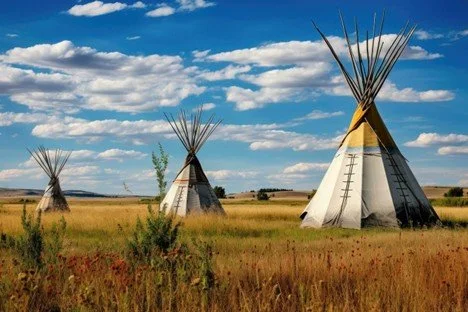
Image : https://www.vecteezy.com/photo/32201598-traditional-indian-teepee-in-the-prairie-with-blue-sky-and-clouds-first-nations-tipis-on-the-open-prairies-of-north-america-ai-generated