Demystifying University for Indigenous Youth Through Mentorship
Indigenous youth in Canada face systemic barriers that extend far beyond the classroom. Overrepresented in the criminal justice system while underrepresented in post-secondary institutions, many young Indigenous people navigate educational pathways without adequate representation or cultural safety. Limited exposure to university spaces, unfamiliar academic language, and campus cultures that don’t reflect their identities create anxiety, self-doubt, and a pervasive sense of not belonging. Yet when Indigenous youth see themselves reflected in that space, when they encounter mentors who look like them, come from similar backgrounds, and have walked similar paths. Something shifts and possibility becomes visible.
Building Connection Through Cultural Safety
I became a mentor through the University of Lethbridge’s Indigenous mentorship program because I needed flexible, part time work that wouldn’t overwhelm my course load. What I didn’t expect was how deeply this work would change me. The program matches Indigenous high school and middle school students with Indigenous university students creating culturally safe spaces where young people can explore post-secondary possibilities at their own pace.
Cultural safety is where everything begins. When you’re from a marginalized community, walking into unfamiliar institutions can feel isolating. But when a young person meets a mentor who reflects their ethnicity, their background, and their lived experience, the whole temperature of the room changes. Suddenly university isn’t something that exists for “other people”. It’s something their mentor is actively doing, right now, in real time.
Our program builds this safety deliberately. Before we even step foot on campus, we build connection through activities we choose together: movie nights, laser tag, axe throwing, ribbon skirt making. These aren’t filler activities, they’re foundation building. They create trust and joy in spaces where Indigenous youth can simply be themselves, without the pressure of performing academically or fitting into systems not built for them.
The Power of Representation and Shared Identity
What surprised me the most was how quickly these young people opened up. I expected shyness, hesitation, walls. Instead, I found girls who had so much to say. Things about their interests, their goals, their questions about the future. They weren’t shy, they needed to be heard. And that’s often what’s missing. Someone who listens without judgement, without an agenda to push them toward university or any particular path.
I try not to push my mentees toward higher education. Several of them are more interested in technical schools, and I fully support that. What matters is that they see themselves as capable of pursuing whatever they choose. When they finish a ribbon skirt or complete an axe throwing challenge, they’re not just having fun, they’re building confidence across different parts of themselves. In Indigenous worldviews we understand that confidence in one area of life connects to confidence in others. Master a creative skill and suddenly that math equation feels possible. Build trust with a mentor who believes in you and suddenly asking your teacher for help feels manageable.
Opening Doors to University Spaces
We’ve done campus tours where my mentees met faculty, explored the Fine Arts building, and discovered parts of the university I’d never seen myself. They learned that universities have smudge rooms, that Indigenous elders are welcomed on campus, that their ways of knowing have a place in these institutions. These early exposures reduce fear and build familiarity in a way that matters immensely.
The impact is seen in ways that I didn’t expect. One of my mentees, who had struggled with school attendance, started showing up consistently because she wanted to participate in our program. Her attendance improved because she wanted to be part of something that valued her, that included her, and that made her feel like she belonged. This shift from disengagement to active participation could change everything about a young person’s trajectory.
What I’ve Learned as a Mentor
I came into this role expecting to give. What I didn’t expect was how much I’d receive. These young people have taught me patience, the art of listening, and the importance of simply showing up. When I was overwhelmed with coursework and exams, finding time to meet with them felt impossible. But I made it happen, and those moments became my breaks, my chance to step outside the stress and remember why I’m doing this.
What I’ve learned is that change doesn’t happen through big speeches or perfect grades. It happens in the quiet consistent moments where someone feels seen. If even one young person walks onto a campus someday and thinks “I belong here”, then this program has already done what it was meant to do. And as I keep growing along side them, I’m reminded that Indigenous youth don’t need to be ‘fixed’ or ‘guided’ into institutions. They need spaces that honour who they already are. Mentorship is one way we build those spaces, one relationship at a time.
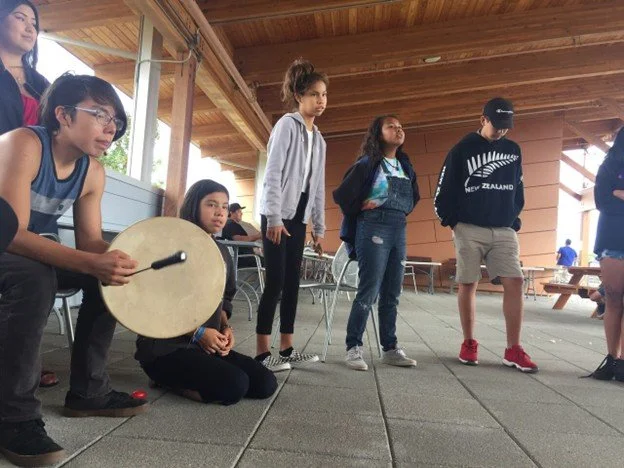
Image: Indigenous teens get preview of campus life at university summer camp | CBC News