Chinese New Year 新年快乐
Chinese New Year 2025

Xiao heng Gao (Michelle)

Qingmei Zhou (Mei)
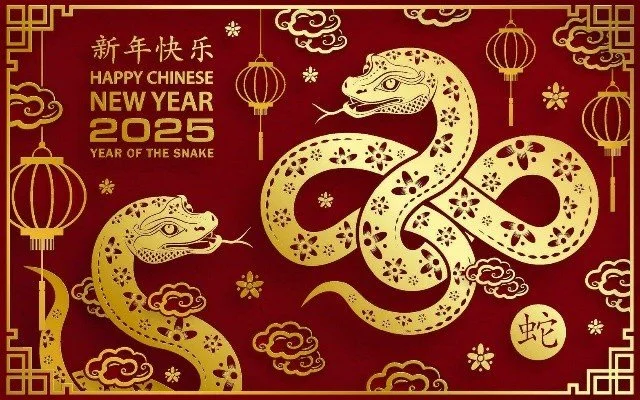
Chinese New Year consists of 30 days of cultural activities and celebrations. Preparation for New Year begins on the first day of the Lunar Calendar. Traditionally, celebrations would begin January 7th with the Laba Festival; three weeks prior to New Years Day. Preparations for the Lunar Year would include religious activities [1]. The Lunar Year is also known as the “Spring Festival of red decorations, elaborate meals, thorough cleaning of homes, and visiting family” [2]. The spring festival is called Chūnjié (Mandarin), or Seollal (Korea) and Tết (Vietnam) [3].
The Chinese New Year traditional rituals have been traced back to the Shang Dynasty under Emperor Wu of Han in the 14th century (140-87 B.C.) with its roots in the agricultural sector to celebrate harvest, and to worship the gods for future success [3].
The celebratory meals include glutinous rice ball soup and moon-shaped rice cakes (New Year’s Cake) and dumplings. The last course of the New Year’s meal would consist of fish for good luck. “Fish” in the Chinese language has the same meaning as “surplus” or “abundance” [3].
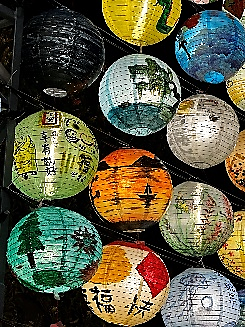
Celebrations end with the Lantern Festival of hanging lit lanterns, usually red, and watching dragon dances in the streets [1,3]. The legend of a terrifying beast living deep in the sea, Moster Nian, would terrify villages. The villagers discovered Nian feared the color red and loud noises, which led to celebrations involving fireworks and red lanterns to scare the monster away [2].
There are many stories of monster Nian that comes out to eat people and cattle in spring around the time of Chinese New Year. Nian is described as a terrifying image with extraordinary strength and speed [4].
Chinese Lion Dances
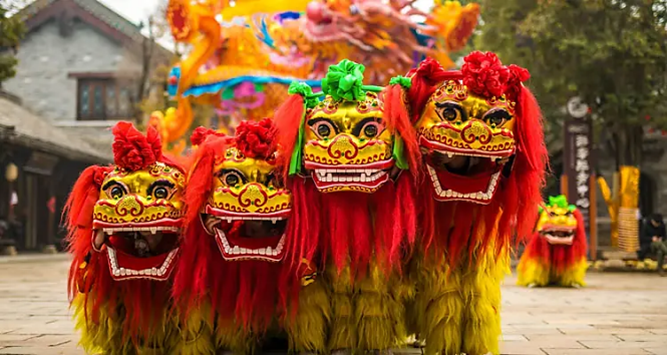
It is believed the lion dance originated to scare off evil spirits and was developed in the Three Kingdoms period (220-280) “becoming popular with the rise of Buddhism in Northern and Southern dynasties (420-589)”. The Lion dance became one of the court dances during the Tang Dynasty (618-907) and is currently a dance used for good luck [5].
The Northern Lion Dance is known as the violent Lion Dance that depict martial arts maneuvers and techniques, while the Lion Dance of the south, is the gentle dance focusing on facial movements that resembles a docile and gentle lion [6].
Every Year these celebrations take place worldwide to celebrate victory over evil and a fresh start to the new year [2].
Family Visits during the first and second days of the Lunar New Year includes a traditional gift exchange of money (Hong Gao) for goodwill. The third day is for temple visits to make offerings, seek blessings and reflect spiritually in the New Year [3].
Chinese New Year 2025 fell on January 29 and was celebrated in Lethbridge on February 8, 2025. Qingmei Zhou (Mei) attended New Years with the Lethbridge Chinese Cultural Dance Club. “Our dance team performed Lucky streak, farewell Changan and Yearning, line dance, easy come easy go, and chilly cha-cha” [7].
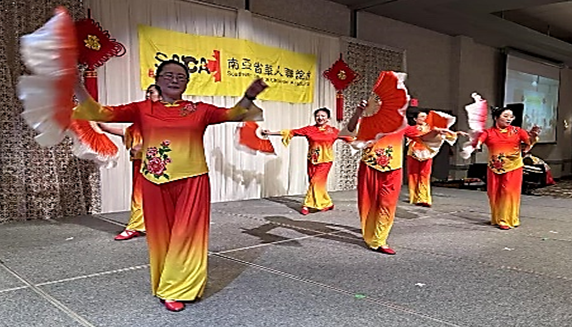
Qingmei Zhou is dancing with the Lethbridge Chinese Cultural Dance Club [8]. “Lucky streak dance (Xìngyùn lián shèng wǔ) is a happy and upbeat dance where dancers wear red and yellow”.
“The yellow and red costume mostly used for Yangko, a rural folk dance especially popular in Northeast China, with a history dating back thousands of years. They danced when people prayed for a good harvest. The dance costume are richly colored, and opera styled. We chose red because it’s the popular color people wear in New Year. Dancers express wishes for all friends to have good luck and health in the New Year”.
“In the Farewell Changan dance (Sòngbié cháng'ān wǔ), dancers wear purple Qípáo. It is a traditional Chinese round fan dance. This song/poem is expressed when people leave their hometown; their friends and relatives will miss them and wish them the best” (Qingmei Zhou).
Thank You! 中国传统文化
The snake symbolizes wisdom and transformation that offers opportunities for personal growth change for the year 2025.
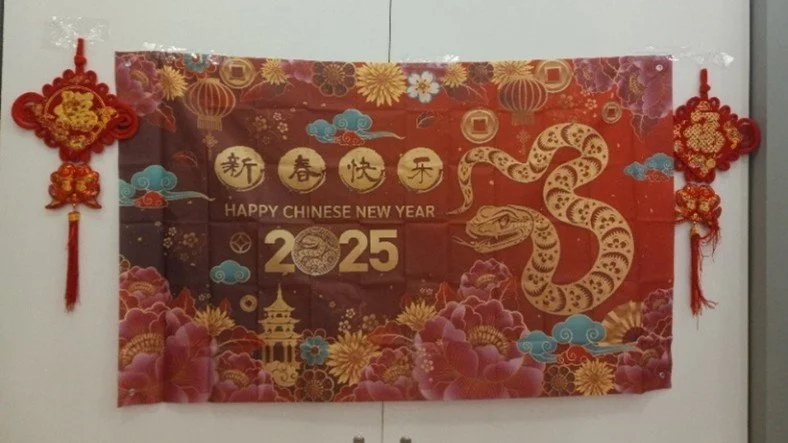
(Lunar New Year 2025: A Guide to the Year of the Snake)
Building Brains Together would like to graciously thank Xiao heng Gao (Michelle) and Qingmei Zhou (Mei) for organizing and demonstrating a wonderful day of traditional Chinese Games. Their assistance with Chinese New Year 2025 is greatly appreciated. It was also wonderful to meet some members of our local Chinese community while playing games as it was a fun event for all.
References
1. Retrieved online January 2025 from: https://www.chinahighlights.com/travelguide/festivals/chinese-new-year-calendar.htm
2. Retrieved online January 2025 from: https://chinesenewyear.net/lunar-new-year-2025-guide-year-of-the-snake
3. Retrieved online January 2025 from: Lunar New Year 2025 ‑ Animal, Dates & Celebrations | HISTORY.
4. Retrieved online January 2025 from: https://blogs.baruch.cuny.edu/monsters
5. Retrieved online January 2025 from: Chinese Lion Dances: What Is It and What Does It Symbolize?
6. Retrieved online January 2025 from: 4 of Ancient China's Olympic Worthy Sports | The World of Chinese
7. Zhou, Q. (2025). In discussion.
8. Retrieved online January 2025 from: https://www.facebook.com/share/p/1R6fXYyHjm/.