By: Demi Good Rider
A Brief History of Hoop Dancing
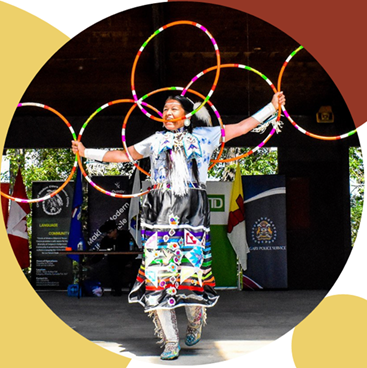
Hoop dancing is a traditional Indigenous art form rooted in storytelling, healing, and ceremony. The hoop symbolizes the circle of life and unity. Historically, hoop dancing was practiced by various nations, including the Lakota, Anishinaabe, and Navajo, it evolved from sacred rituals into a dynamic performance style [1].
Introduction
Hoop dancing is a vibrant expression of Indigenous identity, storytelling, and connection. Shirley Hill (Blackfoot educator, dancer, and grandmother) shares her teachings through movement, prayer, and personal stories. Her sessions aren’t just performances; they’re joyful ceremonies of cultural memory and community [2].
Prayer and Smudging
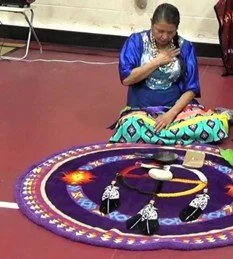
“I smudge my head to think good thoughts… my eyes to see good things… my mouth to speak kind words” [2].
Smudging is central to Shirley’s teachings, a habit that is grounding and connects body, mind, and spirit. She always encourages everyone to pray in their first language, honoring ancestral wisdom.
“Your DNA… your lineage knows. The grandfathers and grandmothers know what we’re doing” [2].
Hoop Dancing as Storytelling
All Indigenous dance styles tell stories. Hoop dancing lets dancers embody animals, emotions, and elements, like the eagle or baby bird. These aren’t just moves; they’re teachings about transformation, flight, and care.
“When you do the eagle… help someone else. The most important part of this day is right here” [2].
Instructions from Shirley
Getting Started:
· Choose the right hoop: You should be able to put it under your armpit and touch the bottom with your fingertips.
· Warm up: Begin with gentle movement and stretching. Shirley suggests moving along to a song.
Basic Techniques:
· Spin the hoop: use a flat hand with your thumb up. Keep your palm open and relaxed.
· Walk the dog: Roll the hoop forward and pull down firmly. It will rebound toward you, ready to be caught with your hand.
· Foot roll: Use your foot to roll the hoop backward toward yourself, allowing you to catch it with your hand [2].
Formations
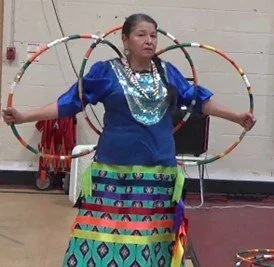
Baby Bird:
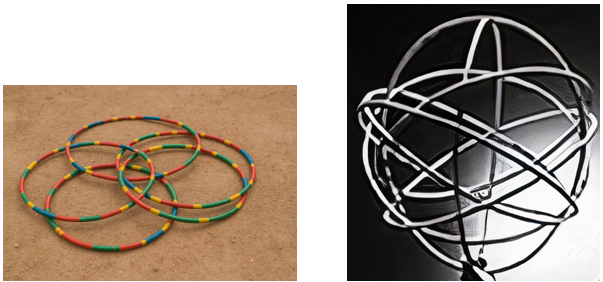
1. Start with the first hoop: place it over your head and rest it diagonally across your body, left shoulder to right hip.
2. Add the second hoop: repeat the motion in reverse. Place the hoop over your head and rest it from your right shoulder to your left hip, forming an X across your torso.
3. Position the third hoop: lay this hoop horizontally across the top of the two diagonal hoops, so it rests securely on them.
4. Lift into formation: reach down and grab the two diagonal hoops near your hips, one in each hand. Gently pull upward. As you do, the horizontal hoop will rise and pass over your head, coming to rest across your upper back [2].Having an early understanding of race and identity, shaped by the adults around them, can help children grow into kind and inclusive members of society.
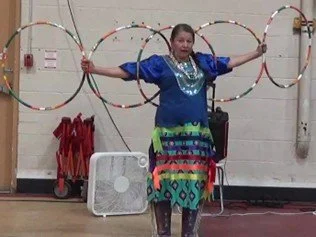
Eagle:
1. Begin in Baby Bird: start with the Baby Bird formation, where three hoops form a resting structure across your upper back and arms.
2. Use the foot roll technique: while maintaining the Baby Bird shape, use your feet to roll or lift a hoop toward each hand, one hoop per side.
3. Extend the wings: once each hoop is in hand, hold them out to the sides. These hoops become the extended wings of the eagle, completing the transformation from Baby Bird to Eagle [2].
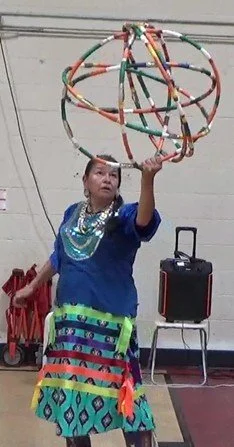
The World:
1. Start with six hoops: lay all six hoops on the ground in front of you.
2. Build the Baby Bird base:
o As explained previously in steps 1-3 under Formations, Baby bird.
3. Layer the second X:
o Pick up two more hoops, one at a time.
o Position them to form a second X across your body, flatter and angled downward at approximately 45 degrees toward the floor.
4. Complete The World:
o Use the foot roll technique to lift the final hoop from the ground.
o Find a natural point in the structure where it can rest securely. This sixth hoop completes The World.
5. Lift and present:
o Gently grasp the full formation and raise it overhead.
6. Break the formation:
o Look up at the world you’ve created.
o Find a point where your arm can enter the structure and break it so that the hoops all land well on one arm and don’t fall to the floor.
o Thrust arm back towards you so the break happens [2].
Transition and Flow
o With practice, you’ll move fluidly between Baby Bird, Eagle, and The World.
o Advanced dancers often stack the hoops for The World formation while spinning, adding dynamic motion and visual impact [2].
Hoop Dancing as Cultural Transmission
“Hoop dancing is more than movement, it’s a story, a prayer, a teaching” [2] – Shirley Hill
The hoop represents the circle of life and the interconnectedness of all beings. Dancers form shapes like eagles, flowers, and the world, each with its own meaning. Shirley’s teachings pass on values like rhythm, respect, and responsibility through embodied practice. Cultural values are transferred not through lecture, but through lived experience, ceremony, and story, and hoop dancing is one such story made visible [3].
Movement as Medicine
Dance doesn’t just build muscles, it builds brains. Research shows that dance improves motor, cognitive, and social skills in children with cerebellar challenges [4]. Shirley’s approach (rhythm, storytelling, and connection) activates the brain’s emotional and sensorimotor systems. Her teachings align with Building Brains Together, which uses play and movement to strengthen executive function in kids.
Movement, Storytelling, and Executive Function
Recent research comparing aerobic training and an interactive floor device found that learning through physical activities combined with cognitive engagement led to greater improvements in executive function, especially in inhibition, attention control, and spatial memory [5].
Hoop dancing mirrors this. Children must focus, organize movements, adapt to rhythm, and collaborate, while embodying cultural teachings. It’s not just physical exercise. It’s cognitive and emotional training through story.
References
1. 1. Moments Log. (2024, August 2024). The tradition of Native American hoop dancing: History, techniques, and cultural role. Retrieved online October 2025 from: The Tradition of Native American Hoop Dancing: History, Techniques, and Cultural Role - Moments Log
2. Shirley Hill, in discussion, August 2025.
3. Clark, W., & Wylie, L. (2021). Surviving a Cultural Genocide: Perspectives of Indigenous Elders on the Transfer of Traditional Values. Journal of Ethnic and Cultural Studies, 8 (2). 316-346.
4. Bégel, V., Bachrach, A., Dalla Bella, S., Laroche, J., Clément, S., Riquet, A., & Dellacherie, D. (2021). Dance Improves Motor, Cognitive, and Social Skills in Children With Developmental Cerebellar Anomalies. The Cerebellum, 21 (2), 264-279.
5. Rymarczyk, K., Makowska, I., & Hyniewska, S. (2024). The Impact of the Interactive Floor Device and Aerobic Training on Executive Functions in Children. Children, 11 (12).