More Than Just a Game: How Sports Shape Children’s Neurodevelopment and Life Skills
by Vezi Ndlovu, B.Sc. Neuroscience, University of Lethbridge
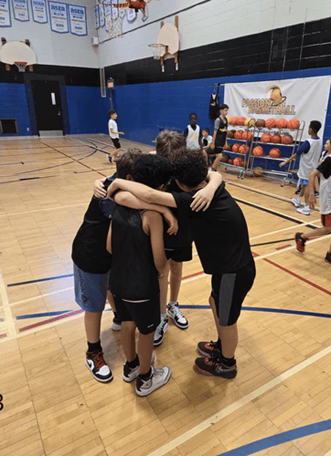
Children engaging in team sports develop communication, teamwork, and leadership skills that support brain development. (Stephens, 2024)
The benefits of organized sports extend well beyond just physical health. Research shows that engaging in sports during childhood supports brain development and cognitive functioning (Tan et al., 2024). Other studies have shown that engaging in sports during childhood can be essential in developing transferable life skills that they can be carried into adulthood (Jacobs & Wright, 2017).
Sports and Brain Development
Childhood is a critical period for the developing brain, where experiences have the greatest effect on their long-term cognitive abilities. Organized sports provide a structured environment that challenges children physically and mentally.
Research shows that children who participate in sports have improvements in key cognitive networks such as concentration or attentional control, executive functions (e.g., decision making, inhibitory control), processing speed, memory, and learning.
Hernández-Mendo et al. (2019) highlights that physical activity is strongly associated with enhanced cognitive functioning, especially during childhood and adolescence when the brain is still developing. These benefits are linked to increased in blood flow to the brain and the promoting the growth and strengthening of neural connections. It also helps regulate stress, supports mood, and can improve sleep quality —all of which contribute to better learning and memory.
The two critical structures for efficient brain communication are grey matter (which processes information) and white matter (the “cable” that transmits signals). Tan et al. (2025) found that children who participated in organized sports have greater grey matter volume and white matter integrity compared to kids who did not engage in any sports. The same children also performed better on cognitive tasks, such as inhibition (a mental “brake system” that favours a more appropriate behaviour) and the speed through which they can process information.
In simple terms, sports help strengthen the brain’s ability to think, learn, and adapt.
Why Team Sports are Especially Powerful
While all sports offer benefits, team sports introduce an additional layer of cognitive and social development. It requires collaboration towards a shared goal, cognitive flexibility in processing real-time communication and adapting to dynamic situations and understanding their roles and responsibilities within a team. Because of this, organized sports create a socially complex environment that can enhance children’s neurocognitive development (Tan et al., 2025).
Beyond brain development, sports help children build transferable skills that will be valuable throughout their lives.
· Children learn how to cooperate and take initiative to guide their peers through teamwork and leadership.
· Sports encourage clear verbal and non-verbal communication within a fast-paced environment.
· Experiencing wins and losses teaches them how to regulate their own emotions and adapt to challenges.
These skills are applicable to school, relationships, and their future careers; helping them excel in these domains.
How Can Families Support These Benefits?
Primary caregivers play an important role in supporting their child’s brain development bby helping them engage in enriching experiences like sports. Parents can focus on promoting participation by prioritizing effort, learning, consistency, and enjoyment, rather than just winning. They should also encourage positive experiences (e.g., respect, teamwork) and reflection by asking questions like: “What did you learn today?” or “How did you help your team?.”
Families in Lethbridge can access a variety of paid programs to support their children’s sports development, such as:
· Lethbridge & Area Recreational Hockey Club – Their program offers affordable, non-body checking, recreational hockey for boys and girls (ages 4–16) across various skill divisions. Focusing on fun, fitness, as well as developing life-long skills.
· Lethbridge Minor Basketball Association – A non-profit youth basketball program operating with Alberta Bastketball Association (ABA). Practices and games are held in Lethbridge schools starting January to June and supported by volunteer coaches and referees.
· Lethbridge Amateur Wrestling Association – Offering inclusive, adaptable, year-round Olympic-style wrestling training for all genders (ages 12-18). Their goal is to build self-esteem and relieve stress, improve general demeanor, and foster resilience and conflict resolution skills.
Families who may face financial barriers to enrolling their child in community sports can refer to these programs:
· Kids Sport grants: https://kidsportcanada.ca/alberta/lethbridge-taber/apply-for-a-grant/
Lethbridge Sport Council fee assistance: https://lethbridgesportcouncil.ca/sport-and-active-recreation-fee-assistance
City of Lethbridge Fee Assistance Program: https://www.lethbridge.ca/community-services-supports/community-social-development-csd/fee-assistance-program/
Healthy Lethbridge financial assistance: https://healthylethbridge.ca/get-active/financial-assistance-grants-subsidies
Final Thoughts
Organized sports are more than just physical activity. They are instrumental in shaping how children think, interact, and grow. Through participation in individual and team-based sports, they develop stronger cognitive abilities and crucial life skills that extends beyond the playing field. Encouraging children to engage in community sports is supporting healthy brain development, social functioning, and future success of the younger generation.
References:
1. Stephens, P. (2024, December 10). How basketball develops leadership skills. Passion Basketball. https://passionbasketball.ca/blogs/news/how-basketball-develops-leadership-skills
2. Tan, F. M., Yu, J., & Goodwill, A. M. (2025). Sports participation & childhood neurocognitive development. Developmental cognitive neuroscience, 71, 101492. https://doi.org/10.1016/j.dcn.2024.101492
3. Jacobs, J. M., & Wright, P. M. (2017). Transfer of Life Skills in Sport-Based Youth Development Programs: A Conceptual framework bridging learning to Application. Quest, 70(1), 81–99. https://doi.org/10.1080/00336297.2017.1348304
4. Hernández-Mendo, A., Reigal, R. E., López-Walle, J. M., Serpa, S., Samdal, O.,
Morales-Sánchez, V., Juárez-Ruiz de Mier, R., Tristán-Rodríguez, J. L., Rosado, A. F., & Falco, C. (2019). Physical Activity, Sports Practice, and Cognitive Functioning: The Current Research Status. Frontiers in psychology, 10, 2658. https://doi.org/10.3389/fpsyg.2019.02658